Water: From Molecule to Ocean Bring Junior Einsteins Science Club® to Your School for Science Week Ireland
There’s a moment every educator recognises. A child asks a question about water—”Why does ice float?” or “Where does rain come from?”—and suddenly, you see it. That spark of genuine curiosity. The beginning of real scientific thinking.
That moment is where everything starts.
Water seems simple. We drink it, swim in it, watch it fall from the sky. But water is profoundly complex—and that complexity is what makes it so fascinating. It’s the molecule that made life possible. The force that shaped our island for thousands of years. The resource that will define our future.
This November 8–15, Science Week Ireland celebrates exactly that with the theme Water: From Molecule to Ocean. And there’s no better time to bring that curiosity alive in your school or organisation through hands-on, inquiry-based science.
Why Water Science Matters Right Now
Ireland’s relationship with water runs deep. Over 7,500 km of coastline. Rivers that guided our ancestors. Peatlands and wetlands that sustain our ecosystems. Lakes that reflect our sky. Yet today, our waters face unprecedented pressures—from climate change, pollution, and the demands of a growing world.
But here’s the hopeful part: Irish researchers are at the forefront of understanding water in all its forms. From its molecular behaviour to its role in biodiversity, from conservation to innovation, the science of water is shaping how we care for our planet.
When young people understand water science—not from a textbook, but through doing it—everything shifts. They stop seeing water as something to take for granted. They start seeing it as something to protect, to innovate with, to understand deeply.
The Science of Water
Water seems simple. H₂O. But water is profoundly complex.
At the molecular level, water’s unique properties—its ability to dissolve, conduct electricity, expand when frozen—make life possible. Understanding why ice floats (most substances sink when frozen; water does the opposite) is understanding something fundamental about why our planet works.
In our ecosystems, water systems support biodiversity and regulate our climate. Rivers aren’t just water flowing downhill. They’re habitats. They’re nutrient pathways. They’re history written in stone and sediment.
In human health and innovation, water quality directly impacts wellbeing. The science of water treatment, desalination, and conservation is literally the science of survival and thriving.
Every one of these questions—molecular, ecological, practical—starts with curiosity. With observation. With kids asking why and having space to discover answers themselves.
The Power of Hands-On Water Science
Here’s what we know works: when children do science rather than just read about it, everything changes.
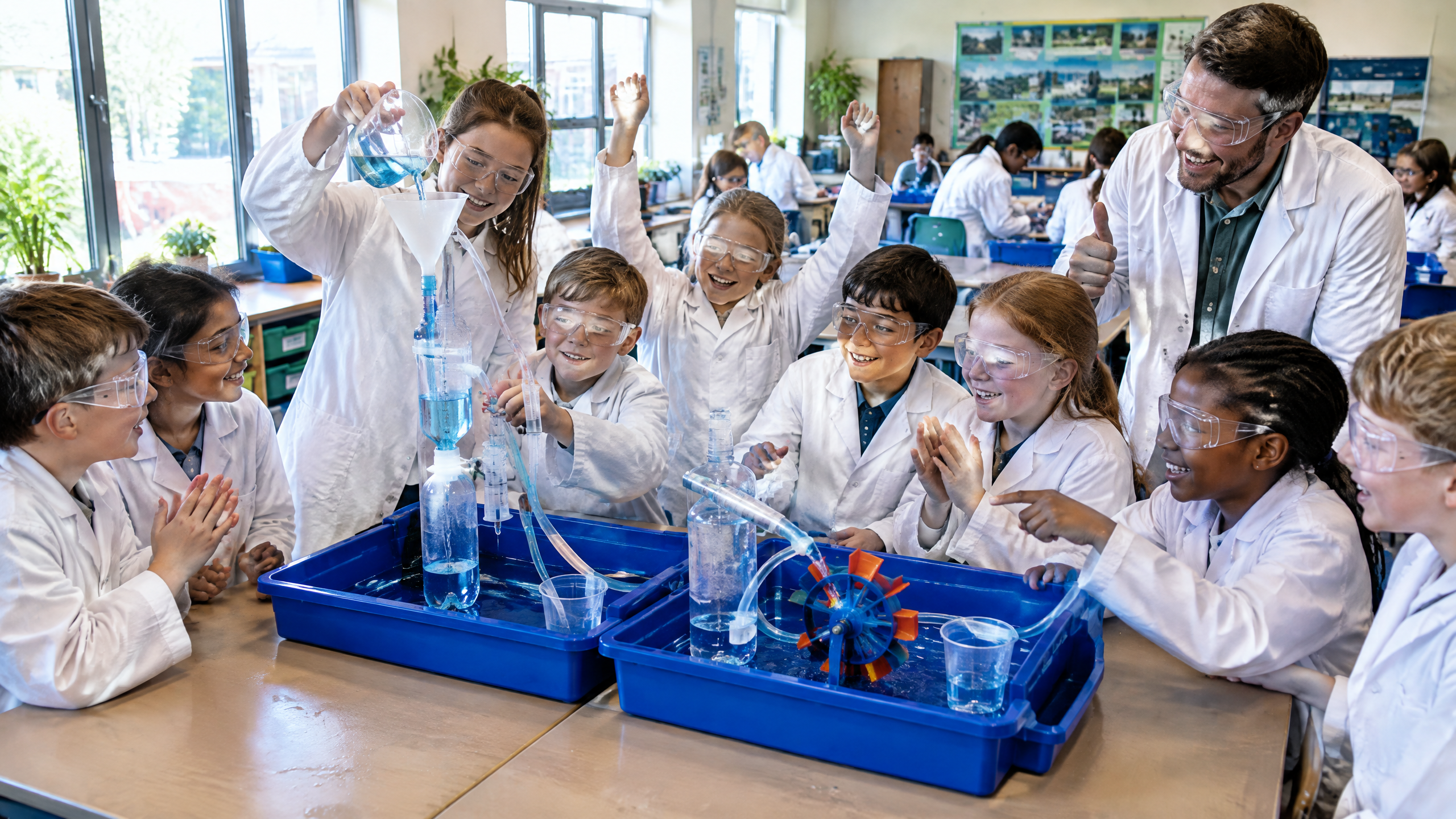
Instead of memorising that water has a high specific heat capacity, students observe how water cools differently than other liquids. Instead of learning about water cycles from a diagram, they create miniature water cycle systems and watch them work. Instead of being told that water dissolves certain substances, they test different materials and discover which ones dissolve and why.
In those moments—when a child realises they can understand something they thought was complicated, when they ask their own questions and find answers through experimentation—that’s when curiosity becomes their thing. When science becomes possible for them.
What Junior Einsteins Science Club®Brings to Science Week Ireland
Junior Einsteins Science Club is built on exactly this philosophy: hands-on, inquiry-based discovery where children ask questions and find answers themselves.
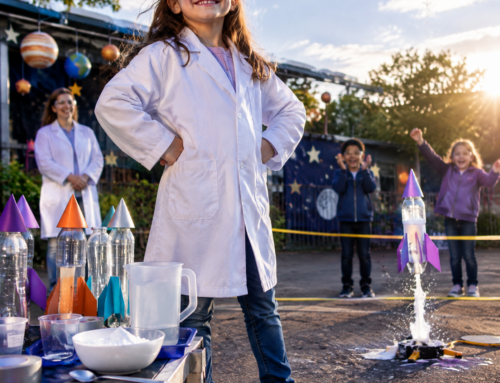
For Science Week Ireland, we bring workshops and experiences that make water science real:
Water Molecule Investigations: The Tiny Forces That Hold Everything Together
Water looks like nothing, but it’s actually extraordinary. Your students will explore why ice floats (nearly everything else sinks when it freezes—water is showing off). They’ll test surface tension by floating needles on water without them sinking. They’ll discover why salt water and fresh water behave differently, and why your fingers wrinkle in the bath after ten minutes but don’t turn to soup. Every experiment is something they design and test themselves, and every discovery is genuine science, not a trick they’ve been shown.
Ecosystem Studies: What Lives in the Water Around You—And Why It Matters
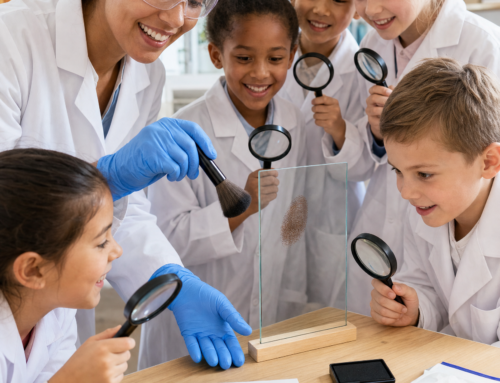
A freshwater river or lake isn’t just water. It’s a neighbourhood. Your students will investigate the creatures that live there, the plants they depend on, and the delicate chains that hold it all together. They’ll learn to use real scientific tools to observe and classify what they find. If you’re near a river or pond, we can take samples and test them in real time. Your Junior Einsteins will become the people who understand what their local water is telling them.
Water Treatment and Innovation: Making Filthy Water Drinkable
This is real engineering. Your students will design and build water filters using sand, gravel, and charcoal—the same methods water companies use. They’ll see what happens when you put muddy water through them, and discover why some designs work and others fail spectacularly. They’ll test pH levels and understand why some water is safe to drink and some isn’t. By the end, they’ll know exactly how the water gets from the tap to their glass, and why people whose water supply is broken have such a massive problem.
Inquiry-Based Experiments: Children as Real Scientists
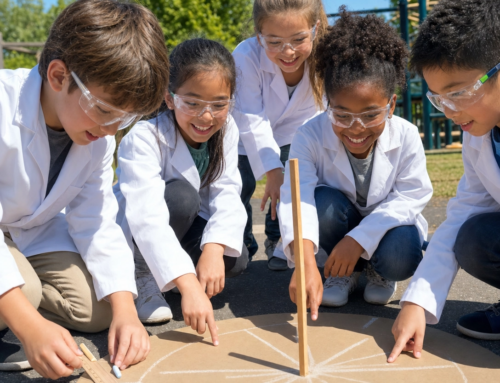
Every activity follows the scientific method. Your students don’t get told “here’s what will happen.” They predict. They test. They observe. They’re wrong sometimes—and that’s the best part, because failure is data. They learn to ask better questions. They discover what they didn’t expect. That’s how real scientists work, and that’s how every Junior Einsteins session works.
Real-World Connections: Your Water, Your Rivers, Your Responsibility
Every activity links back to their water—the rivers they know, the rain that falls on their school, the taps in their homes. They’ll understand why water is precious, why pollution matters, and why the choices they make today affect the water tomorrow. Science stops being abstract and becomes urgent and personal.
Why Book Junior Einsteins Science Shows and STEM Workshops for Science Week Ireland
Science Week is the perfect moment. Schools and organisations across Ireland are celebrating water science. But celebration is more powerful when it’s real.
When your students conduct a water quality test on a local river sample. When they understand what they’re testing for and why it matters. When they realise their school’s water use matters to the ecosystem—that’s when science becomes theirs.
We offer:
- Flexible dates: November 8–15 (or dates that work for your school)
- Customised workshops: Tailored to your students’ ages and curriculum
- Full facilitation: We handle materials, setup, and all the inspiration
- Connection to real science: Every activity links to actual environmental science and conservation
Making a Difference
Science literacy isn’t about memorising facts. It’s about developing the habits of mind that let us understand the world, question what we’re told, and imagine solutions to the challenges ahead.
Our children will inherit a world where water is increasingly precious. They’ll need to understand water science—not to pass exams, but to make decisions, solve problems, and protect what sustains us all.
That’s what hands-on science education does. It builds the next generation of thinkers, problem-solvers, and stewards.
Ready to Make Science Week Ireland Unforgettable?
Contact Junior Einsteins Science Club today to book a hands-on water science experience for your school or organisation.
- Flexible dates: November 8–15, 2026
- All ages: Primary and secondary students
- Customised: We tailor workshops to your needs and curriculum
- Full support: Everything from materials to facilitation
Let’s bring the wonder of water science to your students. Because when kids do hands-on science, they discover what’s possible. They discover that they can understand the world. They discover that science is theirs.
Celebrate Science Week Ireland 2026
November 8–15 | Theme: Water: From Molecule to Ocean
- Explore events at scienceweek.ie
- Book a Junior Einsteins experience for your school
- Ask a young person: “Where does our water come from?” and explore the answer together
- Discover how Irish researchers are protecting our waters
Because water connects us all. And understanding water might just be the most important science of our time.
www.junioreinsteinsscienceclub.com
Junior Einsteins Science Club® Ltd.
#ScienceWeekIreland #WaterScience #ResearchIreland #IrelandSTEM #ScienceWeek #JuniorEinsteins #JESC #HandsOnScience #STEMEducation #ScienceForKids #InquiryBased #EnvironmentalScience #SciComm #EducationMatters #CuriosityUnleashed