A Whole-School Primary STEM Programme: The Junior Einsteins International School Partnership
Primary STEM looks different in every international school. In a British curriculum school it often lives in STEM weeks, projects and clubs. In an IB PYP school it’s woven through units of inquiry. In an American school it may be a specialist class or a makerspace.
What successful schools share is consistency. Every class gets the same quality of hands-on STEM, on every campus, whoever is teaching. The Junior Einsteins International School Partnership is built to give schools exactly that.
Primary science and primary STEM, working together
Primary science is a curriculum subject, with defined knowledge and learning outcomes. Primary STEM brings science together with engineering, technology and mathematics around a real challenge.
Learning how a circuit works is science. Designing a working alarm that uses that circuit is STEM. The partnership gives your school both: sessions that strengthen your primary science curriculum, and integrated STEM challenges that put that knowledge to work on real-world problems.
A STEM culture that belongs to your school
In many schools, one inspiring teacher carries STEM. The partnership turns that energy into a system the whole staff can use.
Every teacher works from the same learning pathways, scripts and resources. New staff pick up the programme smoothly through the Junior Einsteins Science Club® Academy, and pupils keep enjoying exciting, hands-on STEM every week. Quality stays consistent across classrooms, year groups and campuses, and each teacher saves hours of STEM preparation every week.
Real, integrated STEM that children remember
Our sessions are strongest in science and engineering, and many bring in technology and meaningful mathematics as well:
- Mission MedTech: children become biomedical engineers, building a working heart-valve model and clearing a blocked artery.
- Engineering Clean Water: children design and test real water filters.
- Smart Cities: children design the sustainable, high-tech cities of the future.
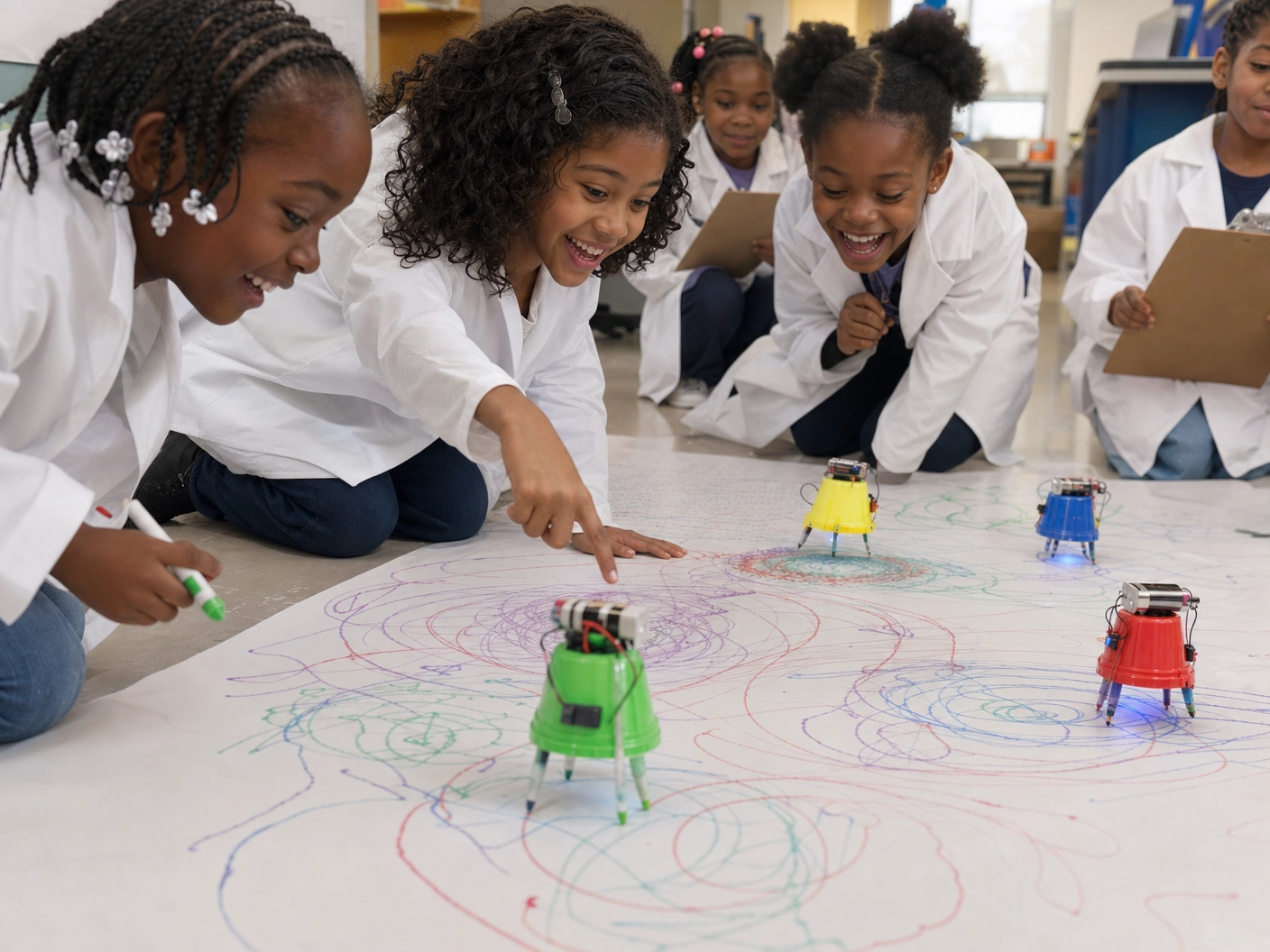
- RoboCreators: children build and launch their own scribbling robots.
- Pulleys: Lifting the World!: children build fixed and compound pulley systems and test how much they can lift.
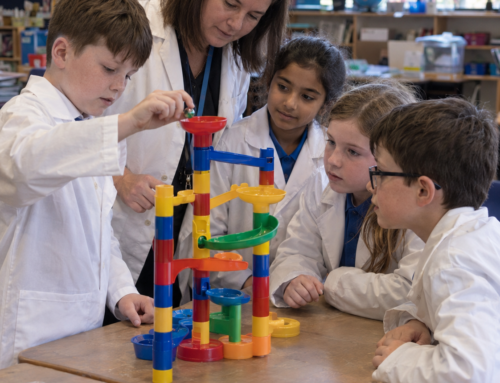
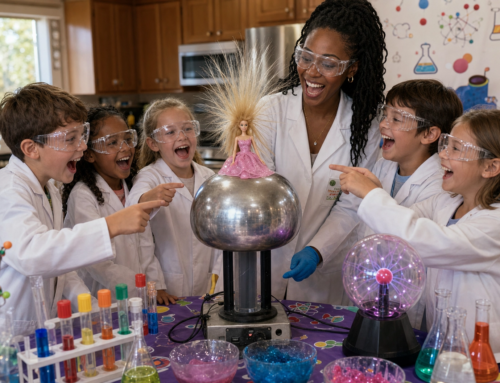
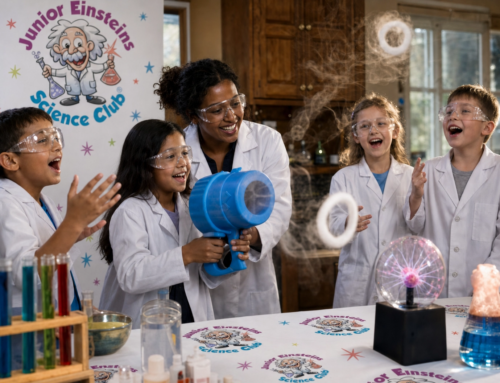
Children build, test, predict and improve, all through hands-on work in small teams. Critical thinking, resilience, teamwork, leadership and communication grow naturally along the way. These skills map directly to the IB Learner Profile and the Cambridge Learner Attributes.
Built for inspection, accreditation and school groups
Every session comes with learning outcomes, risk assessments, differentiation options and inquiry prompts, so the evidence is ready whenever inspectors or accreditation bodies ask.
For school groups, the partnership includes a multi-campus tier. It brings one shared STEM standard to every school in the group, with centralised staff certification and the same session library on every campus.
One partnership, three ways to use it
Junior Einsteins fits into three places in your school. Use it for one, two or all three.
Enhancing and strengthening your primary science curriculum. Practical experiments that bring your science topics to life, in every year group. (Link to Article 1.)
Enhancing and strengthening your STEM provision. Integrated challenges delivered in curriculum lessons, STEM blocks, STEM weeks and whole-school STEM days.
Enhancing and strengthening your ECA and co-curricular activities. Our After School Science Club®, holiday camps and Science Shows, which schools can also run as income-generating enrichment. (Link to Article 3.)
How the partnership works
The International School Partnership is an annual subscription, with tiers for single schools and for school groups. It renews each year at a lower rate than Year One, so your STEM programme, new content and staff certification continue without interruption. Access opens as soon as you sign, and most schools are delivering within five weeks.
Frequently asked questions
Is the partnership suitable for IB PYP schools?
Yes. Sessions are inquiry-driven and fit naturally within transdisciplinary units, with reflection and assessment moments built in.
Can we roll it out across several campuses?
Yes. Our multi-campus tier is designed for school groups.
Does it include technology without screens?
Yes. Technology in our sessions means tools, materials, systems and inventions, such as motorised bots, pneumatic machines and circuits. Every session is screen-free.
How much content is included?
More than 85 sessions, giving two full years of weekly delivery with no repeated topic. Year Three is released this autumn.
Can we use the partnership for more than one area?
Yes. Many schools use it for their primary science curriculum, their STEM provision and their ECA and co-curricular programme together.
Become a Junior Einsteins partner school
View Our Presentation for International School Partnerships; https://lnkd.in/eV2EzwQ3
Whether you’re looking to enrich your primary science curriculum, strengthen your STEM provision or grow your ECA and co-curricular programme, the Junior Einsteins International School Partnership brings all three together. Book a 20-minute conversation with us at educationpartnerships@junioreinsteinsscienceclub.com
#PrimarySTEM #STEMeducation #IBPYP #InternationalSchools #JuniorEinsteins