
The STEM Problem Every International Primary School Has, And the One That Has Finally Been Solved
Ask any STEM coordinator at an international primary school what keeps them up at night, and it is rarely the science itself. It is everything around it. The STEM Problem Every International Primary School Has, And the One That Has Finally Been Solved
Planning units that actually progress year on year. Training staff who did not sign up to be scientists. Stretching a budget that was never designed to cover proper equipment. Proving impact to a board that wants results, not just good intentions.
That is the gap Junior Einsteins Science Club® Ed tech subscription was built to close, and it is why so many international primary schools are now telling us the same thing: this is the first time STEM has felt manageable.
The real cost of “doing STEM” without a system
Most schools do not lack enthusiasm for STEM. They lack the system to deliver it without burning out the people responsible for it.
A STEM coordinator juggling six classes, three campuses, or a curriculum that has to satisfy both a national framework and an international one does not need another set of loose worksheets. They need something that works straight out of the box, term after term, with no reinvention required.
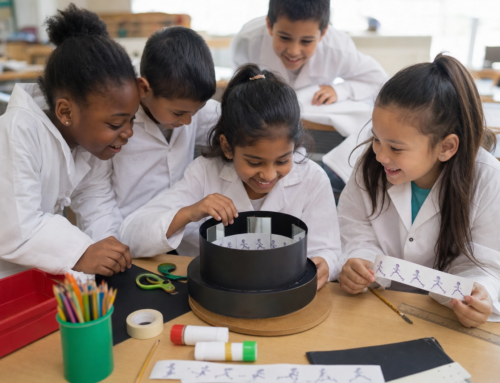
That is the whole point of the Junior Einsteins Science Club® subscription. One coordinator, one teacher, even a non-specialist cover teacher, can deliver a hands-on, high-energy science session with everything already planned: the experiments, the equipment lists, the language support. No late nights. No guesswork. No “I hope this works.”
Why it scales the way schools actually need it to
International schools rarely want STEM in one classroom. They want it across the whole primary phase, consistently, without hiring a science specialist for every grade.
The subscription model means a school is not buying one term of content. It is buying a system that grows with the school: new units released the same quality and structure whether you have 40 pupils or 400, and a framework strong enough that a teacher new to the school can pick it up in week one and still deliver a session that lands.
Schools get a full bank of ready-to-run sessions spanning physics, chemistry, biology and engineering, and more each one built around a real hands-on experiment or investigation: extracting DNA from strawberries, forensic science and crime-scene investigation, fossils and the science of the ancient world, biomimicry and how nature inspires real-world design, smart cities and the engineering behind them, an introduction to quantum physics for curious young minds, Archaeology, Anthropology, pulleys, catapults, working circuits, colour-changing chemical reactions, crystal growing and bottle rocket launches. Each session comes as a full word-for-word script with the materials list, safety notes, curriculum links for both national and international frameworks, and Questions built into every activity to get children genuinely thinking, not just following instructions. Nothing has to be sourced, designed or tested in advance. It is opened, prepped and delivered
That is what “scaling STEM” actually means in practice. Not more pressure on fewer people. The same wow-factor science, delivered by more classes, with less strain on the staff doing it.
What schools are actually feeling
Less prep time. Less second-guessing. More confidence in the staff delivering it, because they are following something proven rather than building it from scratch. And children who are doing, making, testing and thinking in every single session, not watching a video because the teacher ran out of time to plan something better.
That is the change international schools keep describing to us: STEM stopped being a stress point on the timetable and became one of the most reliable, most loved parts of the week.
If your school is ready for that change
If you are a STEM coordinator, head of primary, or principal looking at your science provision and wondering how to make it consistent, sustainable, and genuinely exciting across your whole school, without adding to anyone’s workload, we would love to talk you through how the subscription works for your context.
Get in touch and we will show you exactly what a term looks like in practice.
welcome@junioreinsteinsscienceclub.com
#STEMeducation #InternationalSchools #PrimaryEducation #STEMLeadership #SchoolPartnerships #JuniorEinsteinsScienceClub #HandsOnLearning #EdTech #SchoolLeadership #FutureScientists